 Mangroves & blue carbon · Digital MRV
Tsunza mangroves with ABSA Life
One hectare planted, mapped and monitored plot by plot, and a second, larger block beside it.
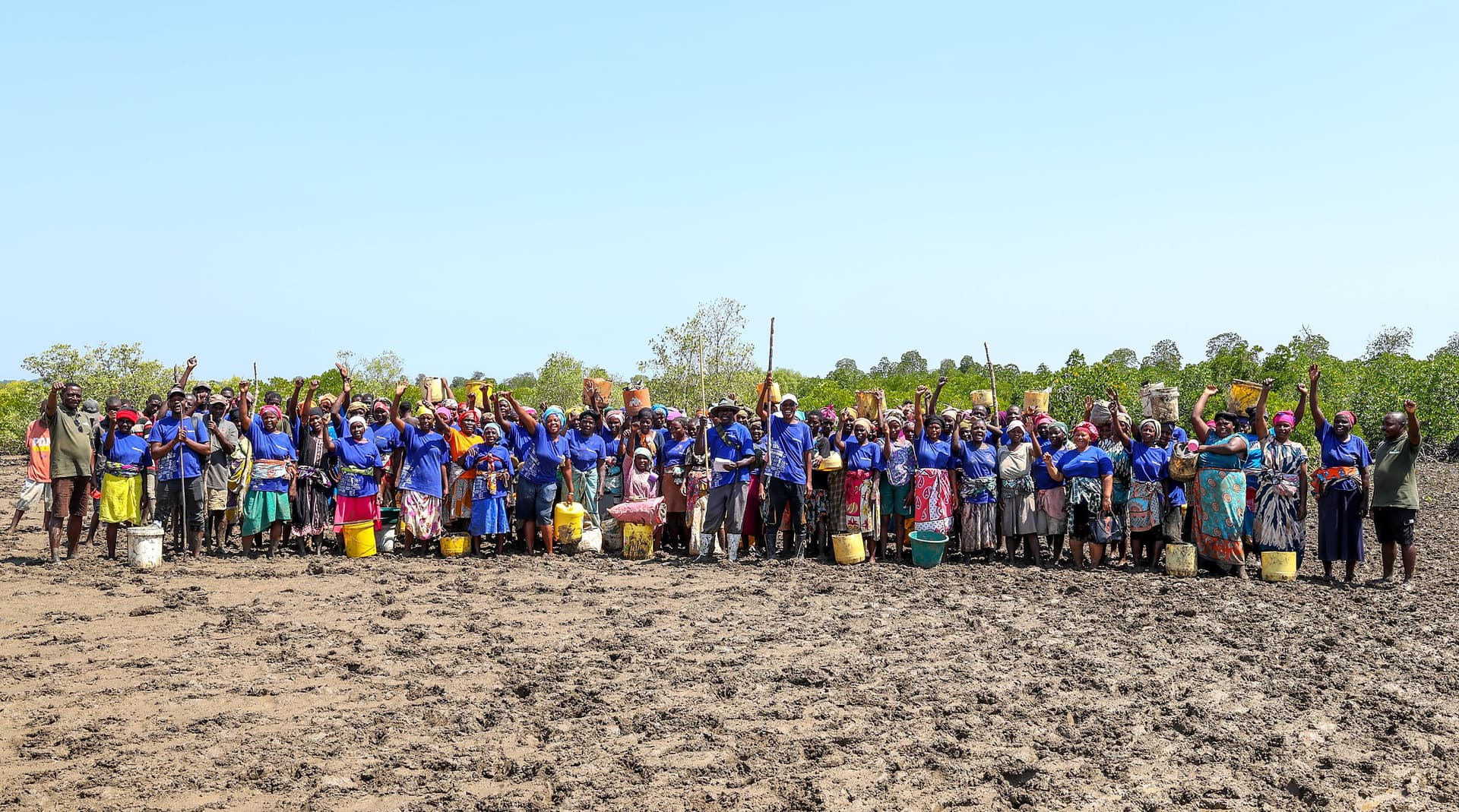
Absa Life Assurance Kenya (ABSA Life) funded 10,000 mangroves on 1 hectare at Tsunza Block, Mwatsumbo forest ecosystem, Kwale County, planted on 19 April 2025 with the Mwatsumbo Community Forest Association and 315 community members. At the first monitoring visit in September 2025, every planted seedling in the sample plots had survived.
- mangroves on 1 hectare, April 2025Source: ABSA Life monitoring report 1, Sept 2025
- 10,000
- survival in sample plots, September 2025Source: ABSA Life monitoring report 1, Sept 2025
- 100%
- Funder
- Absa Life Assurance Kenya
- Implementing partner
- Furaha & Baraka Farms (FBF)
- Community partner
- Mwatsumbo Community Forest Association
- Location
- Tsunza Block, Mwatsumbo forest, Kwale County
- Planting
- 19 Apr 2025; second block Apr 2026
- Species
- Ceriops tagal · Rhizophora mucronata
- Stage
- Surviving
Overview
One hectare, measured from the start.
9,000 Ceriops tagal and 1,000 Rhizophora mucronata: 10,000 mangroves on 1 hectare at Tsunza, planted in one day with 315 people.
FBF mapped the planting area, laid a monitoring grid over it and fixed permanent sample plots before the first visit, so survival and growth are measured in the same places every time.
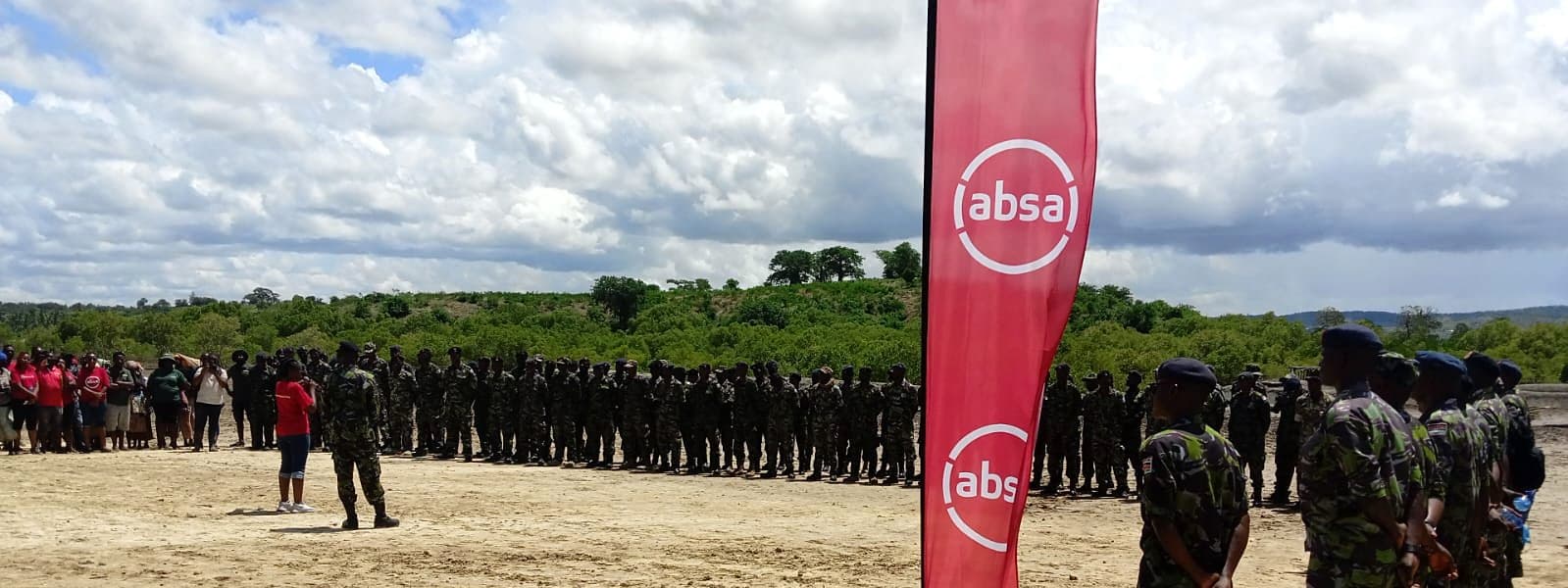
In April 2026 a second, larger block of about 4 hectares was planted beside the first, with the Kenya Defence Forces.
The site
Two blocks at Tsunza.
The 2025 planting and the 2026 block beside it, as mapped by FBF's GIS team.
- Phase 1 · 19 Apr 2025 · 10,000 seedlings · 0.8 ha mapped
- Phase 2 · Apr 2026 · 4.0 ha mapped
Planting blocks from FBF GIS boundaries (KML), 2025–2026; boundaries simplified for display. The map is view-only.
Progress
Where it stands.
- 10,000mangroves (9,000 Ceriops tagal, 1,000 Rhizophora mucronata)Source: ABSA Life monitoring report 1, Sept 2025
- 1 haat 10,000 seedlings per hectareSource: ABSA Life monitoring report 1, Sept 2025
- 315people at plantingSource: ABSA Life monitoring report 1, Sept 2025
- 100%survival in sample plots, September 2025Source: ABSA Life monitoring report 1, Sept 2025
- 50,000trees with ABSA Life in all, as of October 2026Source: FBF partner totals, Oct 2026
How we monitor
FBF's monitoring method, step by step.
- 01
Map the area
The planting boundary is imported into GIS as a polygon: 1 hectare.
- 02
Lay a grid
A 50 m × 50 m grid is laid over the polygon so sampling is spread evenly.
- 03
Fix sample plots
A permanent 10 m × 10 m plot sits at the centre of each grid cell: four plots, about 4% of the site and roughly 100 seedlings each.
- 04
Measure in the field
Teams find each plot centre by GPS, stake it out and record survival, height, diameter, natural regeneration, soil and any damage in the Furaha Baraka App.
- 05
Report
Data flow to the FBF dashboard. Average height at the first visit was 25–32 cm.
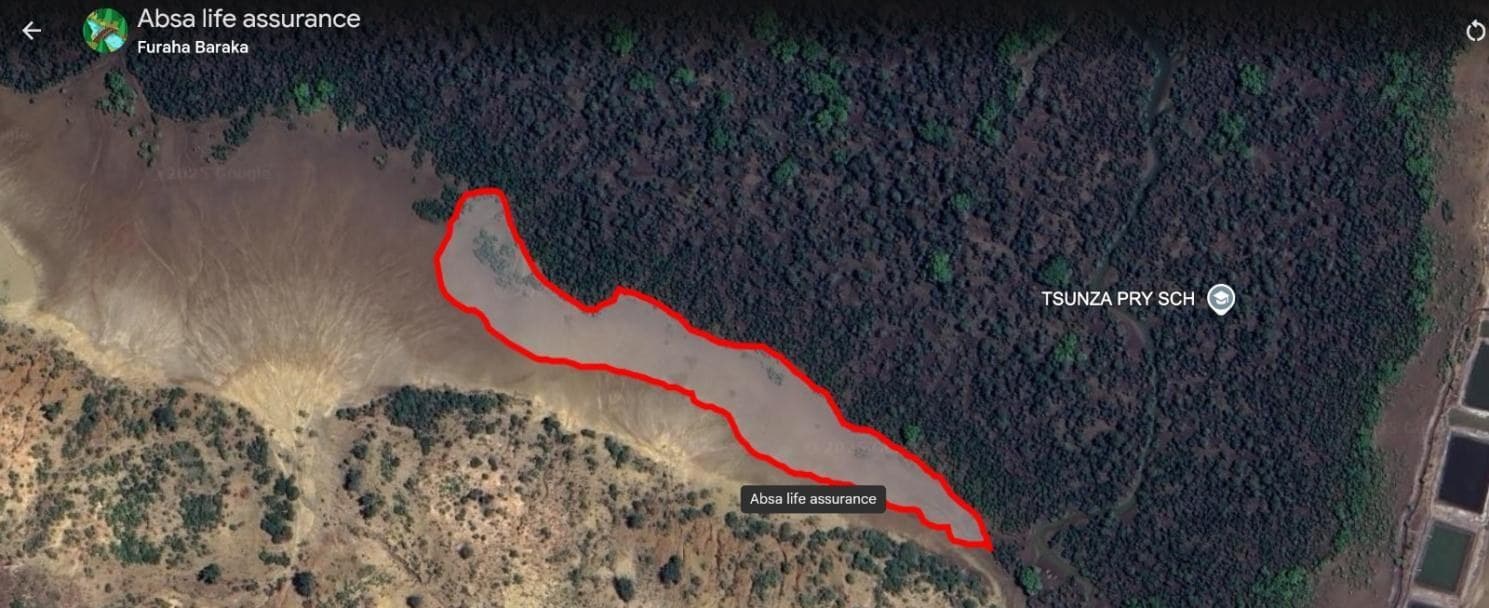
1. The planting area as a polygon. 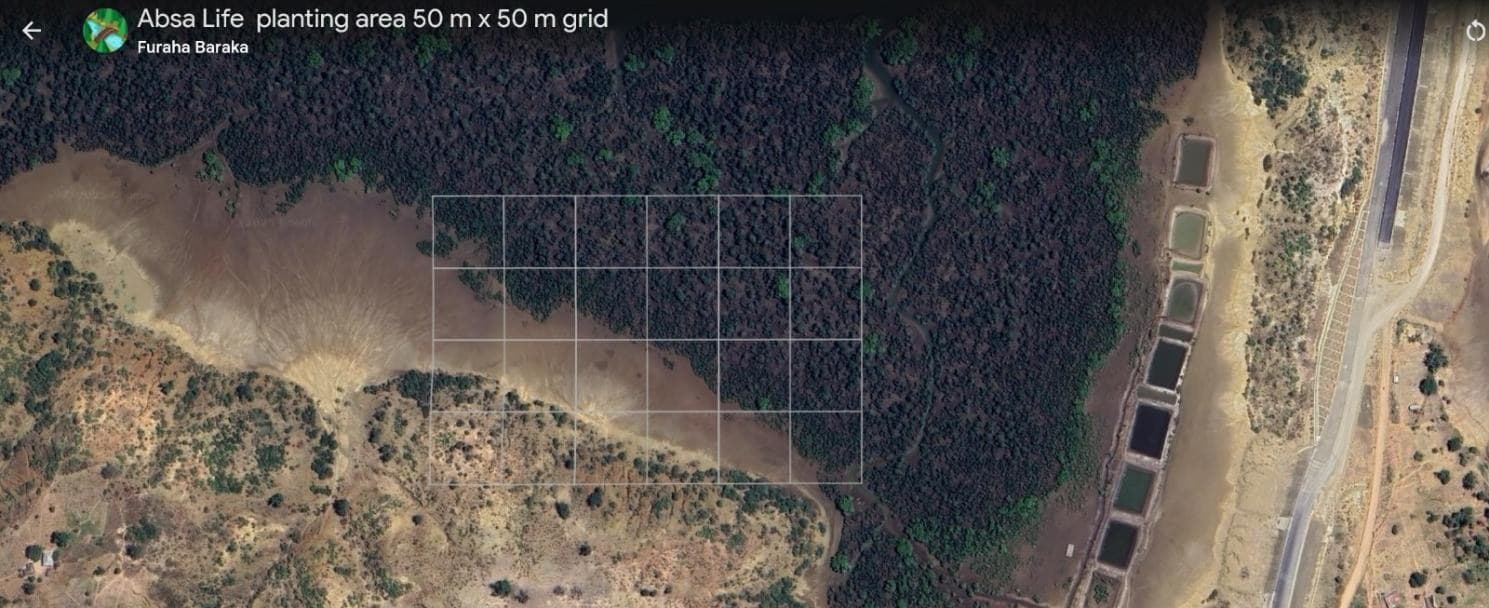
2. A 50 m × 50 m grid over it. 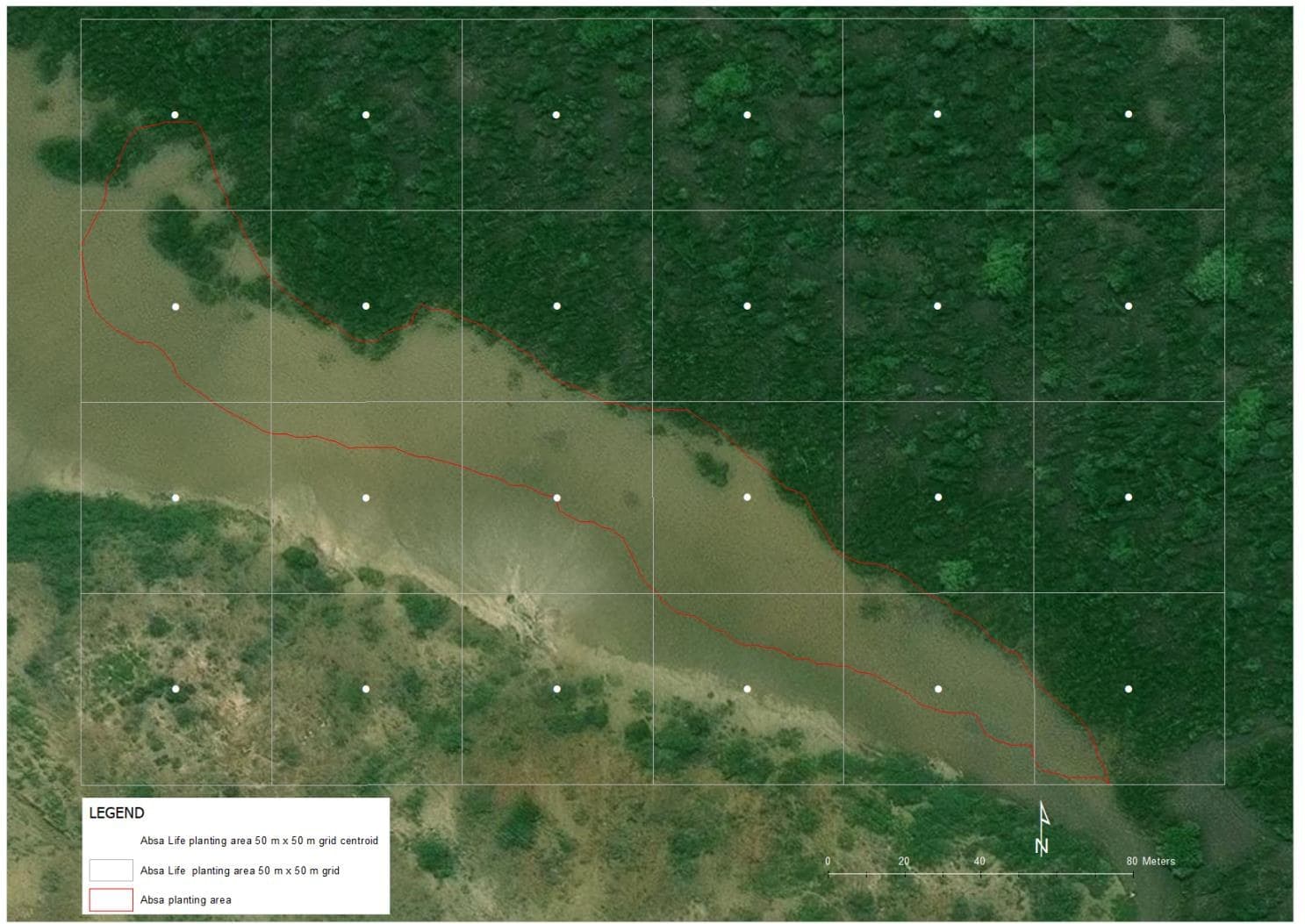
3. Sample plots at the cell centres. 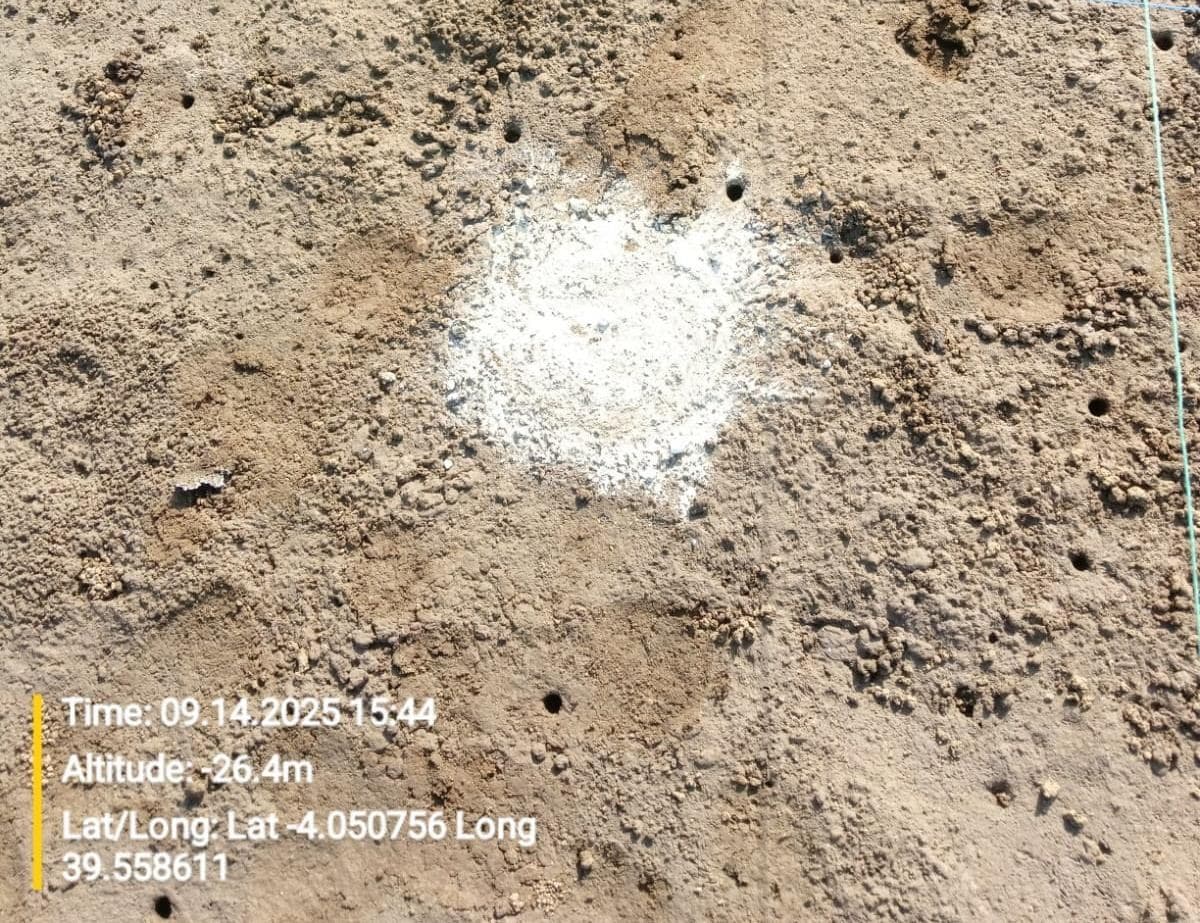
4. A plot centre marked in the field, September 2025.
The seedlings are still too young for standard biomass equations, so carbon is estimated provisionally from early growth models (2.45 tCO₂e at the first visit) and will move to direct measurement as the trees mature.
Community
Watched over every week.
Four association members scout the site weekly and join the monthly monitoring visits.
In April 2026 a second, larger block of about 4 hectares was planted beside the first, with the Kenya Defence Forces.
Partner
In ABSA Life's words.
“FBF has demonstrated professionalism, reliability, and an unwavering commitment to sustainability and innovation. Their ability to blend technology, climate-smart agriculture, and inclusive development makes them a valuable partner for any organization aiming to achieve measurable ESG outcomes.”
Partners
- Mwatsumbo Community Forest Association
- Kenya Defence Forces
Funded by Absa Life Assurance Kenya. Implemented by FBF with the Mwatsumbo Community Forest Association; the 2026 block was planted with the Kenya Defence Forces.
Notes & sources
- Seedlings, species, area, participants, survival, heights and the provisional carbon estimate: ABSA Life monitoring report 1, September 2025.
- Trees planted with ABSA Life in all: FBF partner totals, as of October 2026. No tree count is stated for the 2026 block.
- Planting blocks: FBF GIS boundaries (KML), 2025–2026. The 2025 block maps at 0.8 ha against the report's 1 ha.